This one is long, so you have been warned.
A little over a month ago, I purchased equipment and chemicals and started developing my own B&W film. I did a bunch of research beforehand, and let me tell you, information on film developing is a huge jumbled mess of articles and videos. No one can really give you the same information. When I first started developing, I found two main things:
- Developing B&W is pretty easy and not as delicate as people make it seem.
- When you get the hang of it, you develop (haha) your own way of doing it, and it will be different from everyone’s own way.
Here’s what I use (linked to product):
- Kodak D-76 Developer
- Arista Arifix Fixer
- Kodak Photo-Flo 200
- Arista Premium Hypo Check
- (these bottles for storing mixed chemicals)
- (this squeegee)
- Paterson 35mm Developing Tank (I don’t personally use this one, but It’s similar to mine and the best on the market)
Temperature and time are important for developing, and so I use this website to find developing times and calculate temperatures.
The developer is what makes the image appear on the film and fixer removes the light-sensitivity from it. Photo-Flo isn’t necessary for the actual developing process, but I highly recommend it as a final rinse for the film because it prevents water stains from forming on the negative. Hypo Check also isn’t required, but it is useful because it allows you to test if your fixer is still good, as it can be reused many times. You just put two drops in the fixer and if a white cloud forms the fixer is exhausted. You can also reuse the developer a bit, but I recommend only reusing it up to 3 times, or you will get poor results (developer is super cheap anyway).
Developing the Film:
The process for developing is pretty simple. You first need to load the film from the cartridge into your developing tank in COMPLETE DARKNESS (you don’t need a darkroom to do this, you can just get a film changing bag and do it in your living room). This is the hardest part of the developing process and requires practice. Find some really expired film to sacrifice and practice loading in daylight.
Then you need to presoak the film in soft tap or distilled water that is the same temperature as all of your chemicals to clean it of fingerprints and dust and to soften the emulsion for developing. Agitate it a bit and pour it down the drain.
Then add the developer. The developing times depend entirely on the temperature of the chemicals, the type of film, and the dilution of your developer (I always use it undiluted because it lasts longer and develops faster). After you add it, start your timer and agitate it for 5 seconds every 30 seconds for the time you calculated. Tap the tank on a hard surface twice after to remove air bubbles. When I say agitate, I don’t mean shake it like an extra pulp container of orange juice with all the pulp at the bottom, because that causes air bubbles and that will mess up your film. All you need to do is gently twirl the tank just so a little whirlpool forms inside. After this is done, pour it out into a bottle either to be used again or to be disposed of properly.
Then you rinse the developer off the film with the same room temperature water 3 times. This is called the stop bath, and while there is a special chemical for this, it isn’t necessary and is really just a waste of money.
Then you add fixer. You can’t just look up “fixer times” online and get a good result, because fixer doesn’t affect the actual image, so everyone figures it out their own way. The key to fixer is getting the sweet spot (a very wide range). If you under fix, your film might still be light sensitive when you take it out, or it will have milky white streaks running down the whole negative. I’ve had this happen two times, and you can usually fix it by putting it back in the fixer for a couple more minutes. If you over fix, you can physically damage the negative (fixer is pretty toxic stuff). It depends on the fixer, but you would have to leave the film in it for like 20 minutes to actually cause damage. You will have to test it for yourself, but I’ve had great success with a fix time between 5-6 minutes with the same agitations as the developer. I usually fix for 5 minutes and 40 seconds.
Then you are almost done! At this point, your negatives are no longer light sensitive so you can take them out if you like. Just rinse them once with water, and then add water and a drop of Photo-Flo. Agitate a bit, then pour it out and hang the negatives to dry.
A few notes:
- If you live in an area with hard tap water, you have to use distilled water for everything. If you have soft tap water, you can use it for rinsing, but use distilled water for mixing your chemicals.
- If you’re still confused about something, please leave a comment!
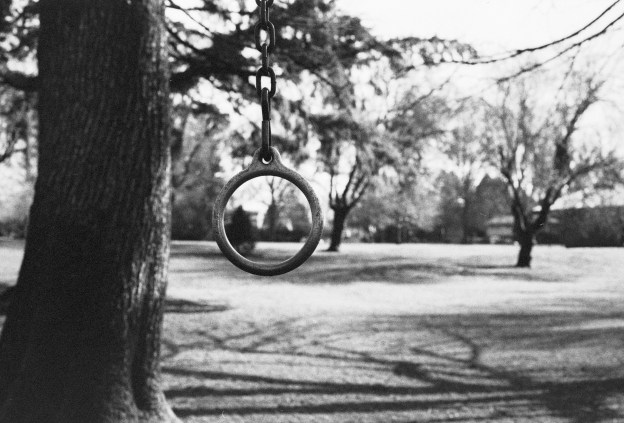
Here are some of my pictures shot with Arista EDU Ultra 200 (it’s a great and super cheap film!)


 Owen's Tech